
66% of workers say their kids' mental health impacts work performance

The pressures of parenthood can impact various aspects of life, including performance at work.
At present, 29% of teens have a mental health problem, 22% think of suicide and 40% are persistently sad (CDC). We wanted to assess the impact of this on parents, and more specifically on their performance at work.
A recent HappierMe poll provides valuable insights into the experiences of working parents across industries. It highlights the challenges faced by modern families and the significant impact this has on work performance and time needed off work. It underscores the need for effective strategies to support working parents and boost workplace productivity.
Poll Details
HappierMe conducted a poll to understand how worrying about children and their mental health impacts work performance and the need to take time off. The poll gathered responses from 1,259 individuals across various industries.
By gathering data from a broad range of participants, the poll sought to quantify this impact and raise awareness of the need for supportive policies and resources.
Overall Results
The HappierMe poll revealed that concerns about children and their mental health significantly impact performance and the need for time off work. According to the results, 34% reported a significant impact, 32% a moderate impact, and 15% a slight impact. Only 20% stated that worrying about their children did not affect their work performance or need for time off.
These findings highlight the importance of recognising this as a problem faced by employees in the first place, and then providing resources to help them to support the mental health of their children.
Impact on Work Performance
When employees worry about their children's well-being, it can be challenging to maintain concentration on work tasks. This leads to decreased productivity, increased errors, and difficulty meeting deadlines.
The cognitive load of juggling work and parental concerns can be mentally and emotionally taxing, leading to burnout and fatigue. This creates a cycle of worry, Stress, and underperformance.
Need for Time Off
If a child cannot go to school because of a mental health problem, the parent is often forced to take time off, because childcare is either not available or prohibitively expensive. Support for children's mental health problems is often not easy to access, and it can become a recurring problem.
Time off can disrupt work routines and strain relationships with colleagues, especially if unplanned or during critical periods. It may lead to feelings of guilt about not performing at work or anxiety about the impact of that on career progression. Inflexible work arrangements can compound the stress workers feel.
Employer Perspective
Employers should recognize the unique challenges working parents face and implement strategies to support them. Offering flexible work arrangements can help alleviate stress Providing access to resources like employee assistance programs, counseling services, or parenting workshops can equip employees with the tools they need.
By acknowledging the challenges faced by working parents and implementing supportive policies, employers can foster a more engaged, productive, and loyal workforce, while promoting a positive work-life balance.
How HappierMe Can Help
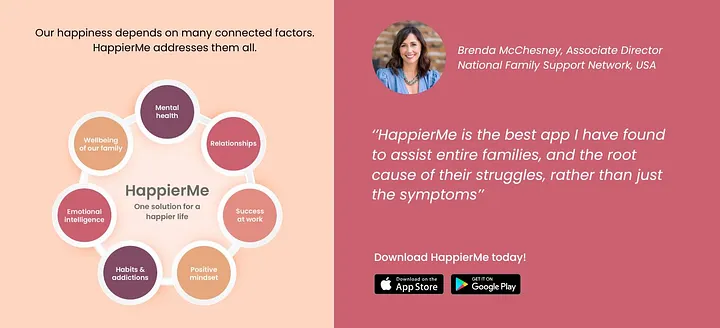
HappierMe is a wellbeing app with a different approach. It has separate sections for teenagers and adults and can support the entire family to flourish.
It helps users develop their self-awareness and emotional intelligence and apply that to manage their emotions and mental health proactively — preventing problems before they occur.
Unlike other apps, HappierMe helps users truly understand the WHY behind their thoughts, feelings, and behaviors. By addressing the root causes of problems, it can create lasting change. It helps parents to support teens to understand and manage their emotions and facilitate conversations that lead to positive outcomes. Having a resource that teens can always access can reassure parents that they have the support when they need it, allowing them to focus better at work.
Understand your mind. Live a happier life.
Life can be tough. The HappierMe app is your personal guide to help you feel better now, but also to take you deeper to understand your thoughts and feelings. It supports you to become the person you want to be, to be happier, manage your emotions and succeed in the world. There are also coaches you can speak to through the app.
About us
Get HappierMe
Support


Copyright © 2024 HappierMe. All rights reserved
Copyright © 2024 HappierMe. All rights reserved


