
Supporting educators: addressing the mental health crisis in education

Teaching is often described as one of the most rewarding professions. It is also increasingly recognised as one of the most stressful.
Across the workforce, mental health challenges are widespread: 76% of employees report experiencing a mental health condition, 1 in 6 struggle with substance abuse, and 1 in 10 suffer from depression. For educators, the picture is even more concerning.
The 2024 NASUWT Wellbeing Survey found that 86% of teachers say their job has harmed their mental health, and 84% experienced increased work-related stress in the past year. Over 80% report anxiety, 54% suffer from sleep loss and 87% have low energy. 3% have self-harmed, and 10% say work-related stress has contributed to the breakdown of a relationship.
The alarming state of mental health among educators
Teachers work under heavy workloads, intense accountability pressure and increasingly challenging pupil behaviour. Workload is the biggest single stressor, cited by 68% of teachers. Low pay adds to the strain.
Overcrowded classrooms, limited resources and the emotional labour of supporting students through their own difficulties all take their toll. The lingering effects of the COVID-19 pandemic, including hybrid teaching, technology problems and concerns about safety, have added further stress.
The impact on education
Educator burnout reduces job performance, lowers student engagement and drives staff turnover. Nearly 30% of new teachers leave the profession within five years, largely due to stress and burnout.
When teachers struggle, students feel it too. The wellbeing of educators directly shapes the learning environment, which is why this problem must be addressed at both an individual and a system level.
Breaking the cycle
Addressing the mental health crisis in education requires a multifaceted approach:
Workplace policies: Schools and educational institutions must prioritize mental health by implementing policies that support educators. This could include reducing workloads, offering flexible schedules, and ensuring adequate planning time.
Access to resources: Providing mental health training, counseling services, and stress management workshops can equip educators with tools to cope.
Peer support networks: Encouraging collaboration and support among educators can foster a sense of community, reducing feelings of isolation.
Systemic change: Policymakers must invest in education by increasing funding, reducing class sizes, and addressing teacher shortages to alleviate the systemic pressures contributing to burnout.
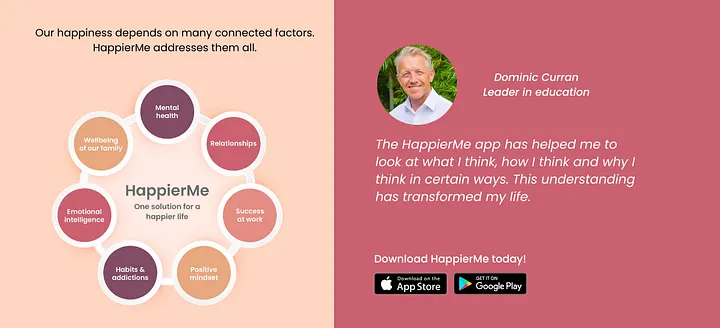
Building resilience: the HappierMe difference
HappierMe is a personal development digital platform that helps users feel better now, and empowers them to develop their emotional intelligence and apply that to lead a happier life.
It helps educators feel better through guided meditations, journaling, and breathing exercises. It then empowers them to develop their self-awareness and emotional intelligence to manage their own mental health, have happier relationships and develop their communication and leadership skills.
What makes it stand out is that it addresses the root cause, not just the symptoms, for lasting change. Preventing mental health problems is so much easier.
Just as we go to the gym to look after our physical health, HappierMe offers a daily routine of breathing exercises, self-reflection, and journaling to look after our mental health.
The separate section for teenagers means schools can support the wellbeing of their students as well as their staff.
With 75+ modules and a host of features including an online journal, a forum for peer support, an extensive library of podcasts, meditations and videos, it's a one-stop solution for a happier life.
Conclusion
The mental health of teachers demands urgent and comprehensive action. By addressing workloads, building supportive school environments and putting clear wellbeing policies in place, we can help educators thrive. Teacher wellbeing is not a luxury. It is essential to the success and sustainability of our education system.
Also read
1. HappierMe
Website
2. 6 ways to transform organisations
3. Reducing workplace conflict and boosting collaboration
4. Self-awareness helps leaders succeed
5. How to manage your own mental health
6. Subscribe to our
newsletter
7. Follow us on
social media
8. Join our
Facebook group
and
LinkedIn Group
Understand your mind. Live a happier life.
Life can be tough. The HappierMe app is your personal guide to help you feel better now, but also to take you deeper to understand your thoughts and feelings. It supports you to become the person you want to be, to be happier, manage your emotions and succeed in the world. There are also coaches you can speak to through the app.
About us
Get HappierMe
Support


Copyright © 2024 HappierMe. All rights reserved
Copyright © 2024 HappierMe. All rights reserved


