



The Mental Health Crisis in the Hospitality Industry: Addressing an Overlooked Issue

The hospitality industry moves fast and is built around keeping customers happy, but underneath that pace runs a steady current of stress. Hotel, restaurant and tourism staff hold the sector together, yet they deal with pressures that hit their mental health especially hard.
A recent study found that nearly half of hospitality workers have thought about suicide or self-harm while on the job — a striking sign of how deep this crisis runs.
Why Mental Health is at Risk in Hospitality
Hospitality work comes with built-in stressors, and long hours combined with high-pressure moments only make them worse. That combination leaves workers especially exposed to mental health struggles.
Unpredictable and Demanding Schedules. Shifts are often irregular and long, leaving little room for rest or a personal life. Without a steady routine, sleep suffers and fatigue and anxiety tend to build.
Emotional Labor. The idea that "the customer is always right" puts a heavy emotional load on staff. Handling complaints, staying calm under pressure and hiding how they really feel all wear workers down.
Low Wages and Job Insecurity. The work is demanding, but pay and job security often don't match it. That financial uncertainty adds another layer of stress that crowds out attention to personal wellbeing.
Toxic Work Cultures. Bullying, harassment and unsupportive management are still common in hospitality settings, and they create hostile environments that chip away further at mental health.
Alcohol and Substance Use. Because bars and alcohol are part of many hospitality settings, some workers lean on substances to cope, which can deepen whatever mental health issues are already there.
The Consequences of Ignoring Mental Health
When mental health goes unaddressed in hospitality, the fallout reaches both people and businesses. Burnt-out, anxious or depressed workers are more likely to quit, driving the high turnover that costs employers dearly. Mental health struggles also tend to bring lower productivity, more absenteeism and weaker customer service.
For the individual, untreated mental health issues can spill into physical health problems, strained relationships and long-term emotional distress. In the most serious cases, as the statistics show, workers may consider self-harm or suicide — a clear sign of how urgently this needs attention.
Breaking the Silence
Stigma remains one of the biggest barriers to addressing mental health in hospitality. Workers often stay quiet out of fear of judgment, losing their job, or being seen as weak. Building workplaces where people feel safe talking about their mental health, without fear of consequences, is essential.
Fighting Back — The HappierMe Difference
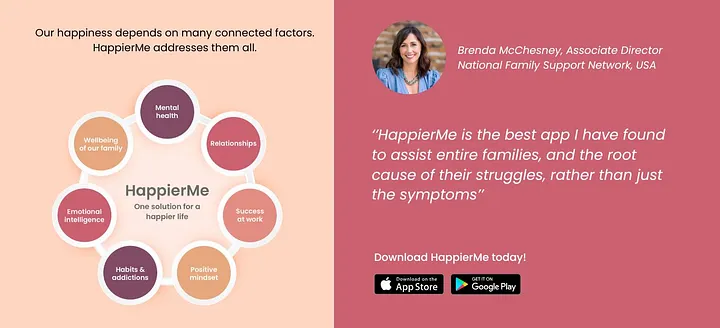
HappierMe is a personal development platform built to help people feel better now, while also building the emotional intelligence they need to work through their challenges and lead happier lives.
HappierMe recognizes the specific pressures hospitality employees face and offers support built around them — guided meditations, journaling and breathing exercises to help people feel better in the moment, and tools to build the self-awareness and emotional intelligence needed to manage mental health, strengthen relationships, work through addiction, and grow communication and leadership skills.
What sets it apart is that it works on the root cause rather than just the symptoms, for change that actually lasts — and preventing problems is always easier than solving them after the fact.
Just like going to the gym looks after physical health, HappierMe offers a daily routine of breathing exercises, self-reflection and journaling to look after mental health. A separate section for teenagers means workers can also support their family's wellbeing. With over 75 modules plus an online journal, a peer-support forum, and a library of podcasts, meditations and videos, it's built to be a one-stop solution for a happier life.
Prevention is So Much Easier
Preventing mental health and relationship problems is always easier than trying to fix them once they've already taken hold.
HappierMe takes a proactive approach — helping people build a calmer mind and develop the self-awareness and emotional intelligence to take charge of how they think, feel and act in the world. It puts people in the driver's seat of their own happiness, helping them self-regulate their emotions and habits, manage their mental health, and build happier relationships.
A Path Forward
The hospitality industry runs on the dedication of its people. Protecting their mental wellbeing isn't just the right thing to do — it's essential to the industry's future. Tackling this crisis head-on lets hospitality leaders build healthier, more supportive workplaces where staff feel valued and empowered.
For workers, taking self-care seriously and reaching out for help when needed can change everything. Together, these efforts can help build an industry that truly looks after its most valuable asset: its people.
To find out more, visit
https://happierme.app, or download HappierMe from the app stores. There is a free trial.
Understand your mind. Live a happier life.
Life can be tough. The HappierMe app is your personal guide to help you feel better now, but also to take you deeper to understand your thoughts and feelings. It supports you to become the person you want to be, to be happier, manage your emotions and succeed in the world. There are also coaches you can speak to through the app.
About us
Get HappierMe
Support


Copyright © 2024 HappierMe. All rights reserved
Copyright © 2024 HappierMe. All rights reserved


